
Sakiori
Sakiori weaving uses a rag weft against a warp of either bast fiber or cotton. The weft material is often made from shredded kimono or other recycled garments which can be of cotton, silk or other material. Sakiori clothing was first woven by Japanese peasants around 1750 for its warmth and durability as newly minted cotton cloth at that time was too rare and expensive for a farmer or fisherman. The home manufacture and use of sakiori clothing and hearth covers in rural areas of Japan disappeared anywhere from 50-100 years ago, although a few individuals and some historical preservation societies still weave this cloth today.
A Wide Sakiori Obi: Rag Woven Kimono Sash in Muted Mottled Colors
mid twentieth century122" x 8 1/2", 310 cm x 21.5 cm This... (more)
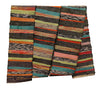
A Multi-Colored Sakiori Obi: Rustic Rag Woven Kimono Sash
mid twentieth century108" x 6", 274.5 cm x 15 cm This is ... (more)
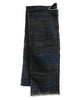
A Length of Wonderful Sakiori Cloth: One Half Unmade Garment
early twentieth centurywhen not folded as shown: 73" x 12... (more)
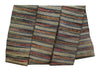
A Striped Sakiori Obi: Rag Woven Kimono Sash
mid twentieth century104" x 6 1/2", 264 cm x 16.5 cm This... (more)
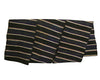
A Deep Toned Sakiori Obi: Thickly Woven
mid twentieth century110" x 11 1/4", 279.5 cm x 28.5 cm T... (more)