
Katazome
Katazome is a resist dye technique in which a paste of rice flour and bran is applied to cloth through a cut paper stencil. This paste is applied with a flat, blunt tool or a brush: where the paste has been pushed onto the cloth, dye will not penetrate. Dyes can be applied using an immersion method, by hand tinting, or by a combination of these applications, depending on the complexity of the desired effect. If the cloth is to be seen from both sides, the application of rice paste through a stencil is applied to both sides of a cloth, requiring an amazing technical skill for exact registration of the stencil on front and back.
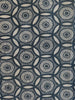
A Length of Jishiro Katazome: Blue-on-White Interlocking Circles
early twentieth century36" x 13 1/4", 91.5 cm x 33.5 cm T... (more)
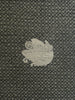
A Length of Edo Komon Cloth: Large Butterfly Family Crest
mid nineteenth century39" x 13 3/4", 99 cm x 35 cm This i... (more)
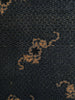
A Length of Rare Orange Ground Narumi Kongata: Katazome as Shibori
late nineteenth century28" x 13", 71 cm x 33 cm Narumi ko... (more)
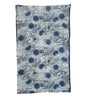
A Length of White on Blue Narumi Kongata: Delicate Image
early twentieth century22" x 13 1/2", 56 cm x 34 cm This ... (more)

A Length of Hand Spun Cotton Katazome: Beautiful Indigo
late nineteenth century25 1/4" x 12 3/4", 64 cm x 32.5 cm... (more)
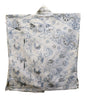
A Rare Blue-on-White Katazome Dyed Han Juban: Sampler Fabric
late nineteenth, early twentieth century26" x 24 1/2", 66... (more)
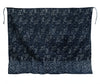
A Katazome Dyed Cotton Koshimaki: Beautifully Figured Under Kimono
early twentieth century32" x 41", 81 cm x 104 cm This ind... (more)
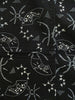
A Katazome Dyed Furoshiki: Deep Indigo Pattern in Crisp Condition
early twentieth century44 1/4" x 33 cm, 112.5 cm x 84 cmT... (more)
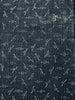
A Length of Medium-Sized Figured Cloth: Katazome Dyed Cotton
late nineteenth, early twentieth century32 1/2" x 12 /12"... (more)
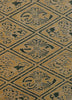
A Length of Stenciled Hand Spun Cotton: Unusual Green and Yellow
late nineteenth, early twentieth century68" x 13 3/4", 17... (more)
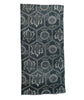
A Length of Large Scale Katazome Cotton: Stylized Tortoiseshell
early twentieth century26" x 12 1/2", 66 cm x 32 cm This ... (more)

A Length of Twice Dyed Katazome Cotton: Rich Low Contrast Indigo
late nineteenth century25 1/2" x 13 3/4", 65 cm x 35 cm T... (more)
A Length of Dark Toned Katazome Cotton: Moody Design
early twentieth century32" x 14 1/4", 81.5 cm x 36 cm Thi... (more)
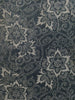
A Length of Katazome Dyed Cotton: Elaborate Rendition of Interlocking Circles
late nineteenth, early twentieth century36 1/2" x 12 3/4"... (more)